
Load Balancing

Load Balancing routers including wired broadband routers, 4G routers and 5g routers with built in load balancing as well as stand along load balancing routers which can accept multiple WAN connections (wired/4G/5G) and load balance between the multiple WAN Internet connections for the users on the LAN to share the connection. These load balancing routers do not bond the connections but share the connections between the LAN users. Some load balancing routers will automatically select the best route to the destination according to the load.

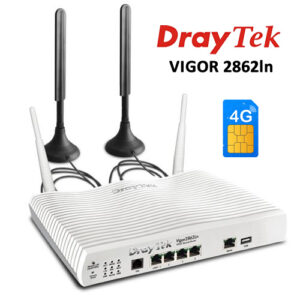
  • Draytek 2862ln

    DrayTek Vigor 2862LN Quad-WAN ADSL2+/VDSL2 Wi-Fi Router with Embedded 4G / SIM Slot

    The DrayTek Vigor 2862LN LTE is a wired router that supports both ADSL or VDSL (BT Infinity / FTTC) and shares the same specification as the standard DrayTek Vigor 2862 but with the addition of built in Wi-Fi & 4G (Cellular / LTE) technology which is compatible with all UK / Ireland cellular networks.

    As well as connecting to the 4G network, the DrayTek Vigor 2862LN 4G router will also work with 3G mobile where 4G in unavailable, but at slower 3G network speeds.

    Along with supporting ASDL & VDSL, alternative WAN port can instead provide connectivity to Ethernet feeds (Gigabit EAN2 is switchable with LAN5), secondary xDSL modems or a 3G / 4G cellular service using a supported USB adaptor. These LAN feeds can be combined for fail-over or load balancing.

    The DrayTek Vigor 2862LN LTE is a wired router with built in Wi-Fi (IEEE 802.11) & 4G (Cellular / LTE) technology.
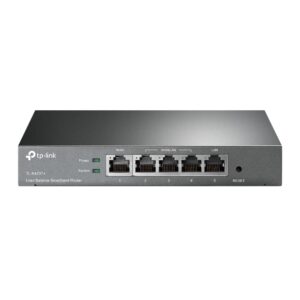
  • TP-Link R470T+ Load Balancing Router

    TP-Link TL-R470T+Load Balancing Broadband Router

    The TP-Link TL-R470T+ Quad-WAN Load Balancing Broadband Router possesses stronger data transmission capacity, increased stability and cost-efficient ownership for networks in places such as Internet cafes and small offices.

    The TP-Link TL-R470T+ has an integrated smart load balancing function over 4 WAN ports which automatically selects the most efficient line according to load and bandwidth requirements, providing users with consistent network uptime and reliable Ethernet connectivity.